TWMAD Behaviour Change & Personal Development Framework

More Than Mentoring. A Framework for Lasting Change.

TWMAD Behaviour Change & Personal Development Framework2026-08-15T17:21:28+01:00

More Than Mentoring.

A Framework for Lasting Change.

TWMAD’s Behaviour Change & Personal Development Framework gives every intervention structure, direction and purpose. It helps young people understand themselves, recognise what influences their behaviour, develop practical strategies and make more positive choices for their future.

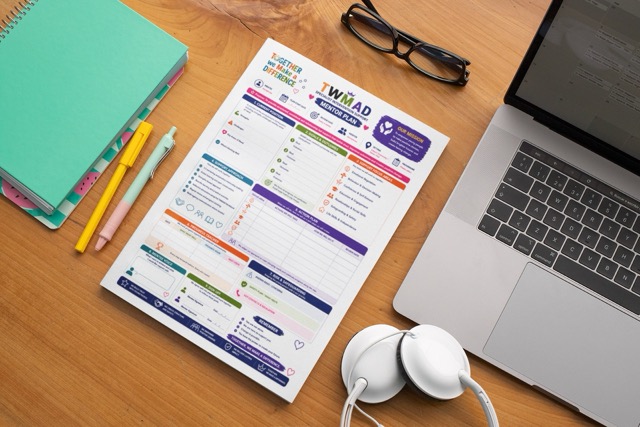
Trusted relationships and positive activities create the opportunity to engage, while guided conversations, practical resources and targeted modules help young people understand themselves, reflect on their choices and develop strategies for lasting change.

Turning Trusted Relationships Into Purposeful Intervention

Our mentors use relationships and positive activities to create the conditions for engagement. The framework ensures that this engagement leads somewhere purposeful. Each session provides opportunities to explore thoughts, behaviours, relationships and choices while developing strategies that can transfer into school, home, the community and adulthood.

  • A structured curriculum underpinning every TWMAD intervention

  • Targeted work around behaviour, emotions, relationships, risk and future choices

  • Practical activities, guided conversations and resources designed for real-life situations

  • Flexible delivery adapted to age, communication, SEND, SEMH and readiness to engage

  • Clear evidence of participation, learning, reflection and progress

Young people may feel that they are simply talking, creating music, playing sport or taking part in an activity. Behind every session, the mentor is building insight, strengthening protective factors and working towards agreed outcomes.

The Relationship Opens the Door. The Framework Guides the Change.
Trevor works in a gym mentoring a young person

Built around need

  • SEND and neurodiversity-aware delivery

  • Clear language, visuals and time to process

  • Activity-based learning for young people who struggle with formal approaches

  • Flexible pacing shaped by readiness and emotional safety

  • Strengths-based work that avoids shame and labelling

TWMAD supports young people with needs including ADHD, autism, SEMH, emotionally based school avoidance, trauma, attachment difficulties, communication needs and FASD. The framework helps practitioners respond to those needs while remaining focused on engagement, wellbeing and progress.

Our Behaviour Change Framework process

1. Engage

We begin with trust, consistency and interests that matter to the young person.

2. Explore

Guided conversations and activities help them understand feelings, triggers, relationships, behaviour and choices.

3. Apply

Young people develop practical strategies, test new responses and connect today’s choices with future outcomes.

Mentors adapt the pace and content while maintaining a clear direction of travel.
Three framework pillars

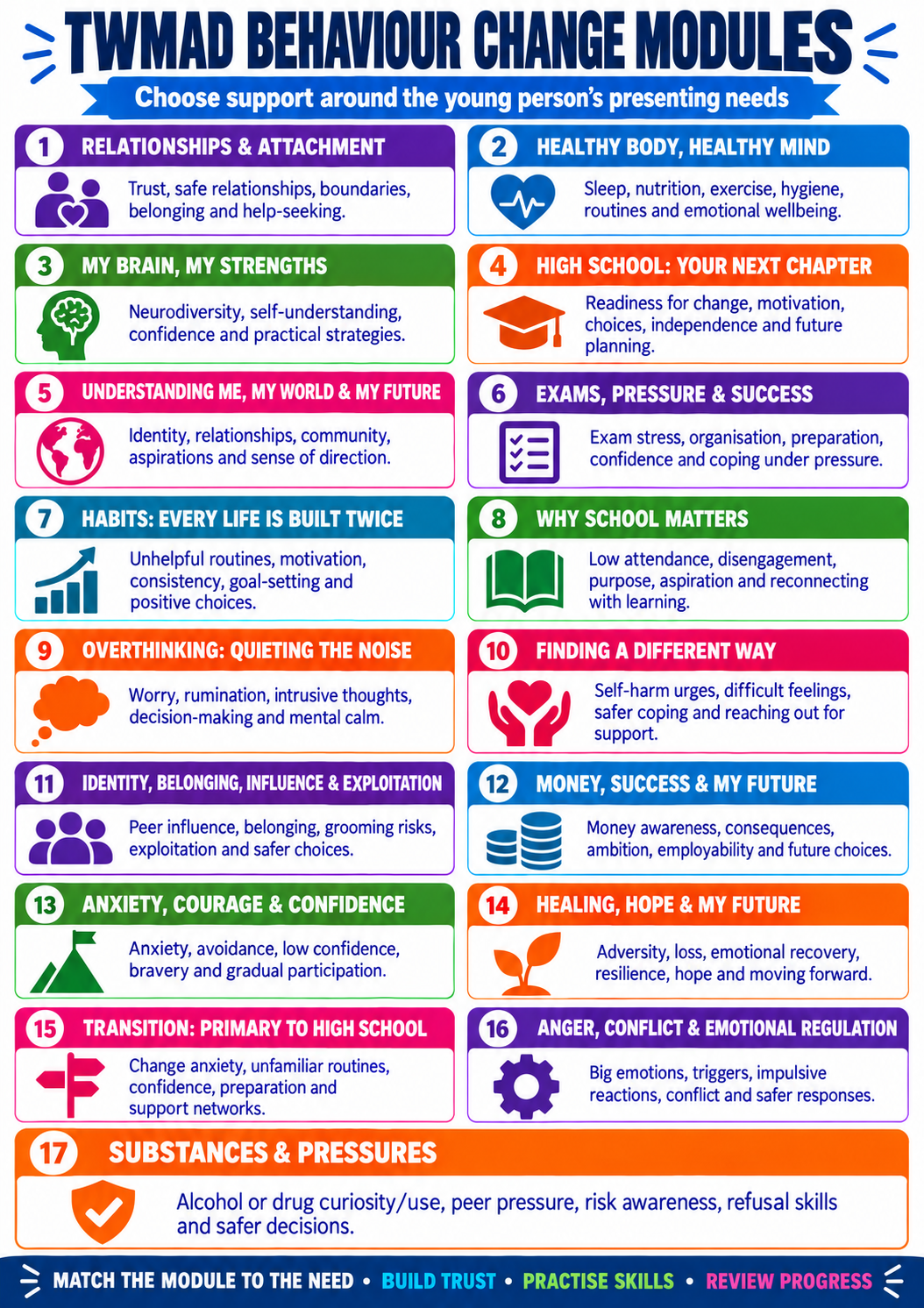
1. Understanding Me

Helping young people develop self-awareness, emotional language, confidence, hope and a clearer understanding of their strengths and needs.

Example areas:

  • My world, identity and strengths
  • Anxiety, confidence and courage
  • Emotional wellbeing and resilience
  • Understanding how my brain works

2. Understanding Others

Helping young people understand relationships, trust, conflict, influence, belonging, risk and the impact of their choices.

Example areas:

  • Attachment, trust and safe relationships
  • Anger, conflict and emotional regulation
  • Peer influence, identity and exploitation
  • Substances, pressure and consequences

3. Understanding My Future

Helping young people connect present choices with education, independence, transition, aspirations and adult life.

Example areas:

  • Mindset, motivation and change
  • Habits, goals and personal responsibility
  • Why education matters
  • Money, success and preparation for adulthood

One Framework Across Every Level of Support

Every referral is different, but our priority remains the same: to reduce immediate risk, build trust quickly and create the stability needed for professionals to make informed decisions and plan the next steps with confidence.

  • Reduced risk of exclusion, placement breakdown or care escalation

  • Improved engagement with school, family and trusted adults

  • Better emotional regulation and safer decision-making

  • Lower safeguarding concerns through consistent, relationship-led support

  • Clear recommendations and next steps to support long-term planning

Need to talk through a referral?

We’re here to discuss the situation, answer your questions and help you decide on the most appropriate support.

Frequently Asked Questions About Our Crisis Intervention

Not Sure Which Level Is Right?2026-08-05T16:20:22+01:00

Tell us what is happening, what has already been tried and what needs to change. We will help identify the most appropriate starting point.

Can TWMAD work alongside existing services?2026-08-05T16:19:59+01:00

Yes. The pathway is designed to complement existing education, social care, SEND, family and multi-agency plans.

Does the pathway include alternative provision?2026-08-05T16:19:39+01:00

Yes. High-Intensity & Alternative Provision can include half-day, full-day and bespoke education or intervention packages.

How is 1:1 or 2:1 support decided?2026-08-05T16:19:16+01:00

This is considered through the referral information, risk assessment, delivery setting and the young person’s presentation.

Can support increase or reduce?2026-08-05T16:19:01+01:00

Yes. The frequency, intensity and focus can be reviewed and adapted as the young person’s circumstances change.

Can Intensive Intervention be used before a crisis develops?2026-08-05T16:18:47+01:00

Yes. It may be used preventatively where concerns are becoming established, or responsively where risk and instability have already escalated.

Is Rapid Re-Engagement only for early intervention?2026-08-05T16:18:18+01:00

No. It can also be used to rebuild engagement following disruption, support a phased return or provide step-down support after a more intensive intervention.

Does every young person begin with Rapid Re-Engagement?2026-08-05T16:17:45+01:00

No. A young person can enter at any level according to their current needs, risks and circumstances.

Proud to partner with
Go to Top